
Sodium Hypochlorite Shelf Life Table; Active Chlorine Loss & Decomposition Time
Introduction
Have you ever purchased sodium hypochlorite (bleach) only to find that it lacks the expected disinfecting or whitening power? Many buyers assume the batch quality was low, but in most cases, the real issue is shelf life and storage conditions.
Sodium hypochlorite is an inherently unstable chemical that gradually loses its active chlorine content over time—even in sealed packaging.
In this technical article, we examine a detailed shelf-life table of sodium hypochlorite based on temperature and concentration, and explain how to protect your investment from chemical degradation.
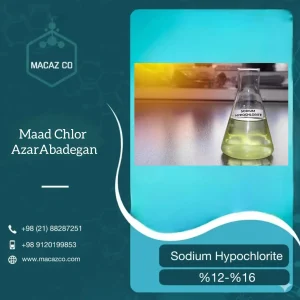
Fresh, high-quality sodium hypochlorite typically has a pale yellow-green color. If the liquid becomes completely colorless, it has likely suffered significant active chlorine loss.
Why Does Sodium Hypochlorite Decompose? (Causes of Active Loss)
Unlike many stable chemicals, sodium hypochlorite continuously decomposes into salt and oxygen. The rate of this decomposition depends on three critical factors:
- Temperature (The Most Important Factor)
Heat is the number one enemy of sodium hypochlorite. According to chemical kinetics principles, for every 10°C increase in temperature, the decomposition rate approximately doubles to quadruples.
- Sunlight (UV Radiation)
Ultraviolet radiation breaks chlorine chemical bonds. That is why storage tanks must be opaque and UV-resistant.
- Initial Concentration
Interestingly, higher-concentration solutions (e.g., 15%) decompose significantly faster than diluted solutions (e.g., 5%).
Technical Note:
Metal impurities such as iron or nickel in low-quality bleach act as catalysts and dramatically accelerate decomposition.
Sodium Hypochlorite Shelf-Life Table (Half-Life)
The table below shows the approximate time required for industrial sodium hypochlorite (initial concentration 15%) to lose half of its active chlorine (half-life), based on storage temperature:
| Storage Temperature (°C) | Environmental Condition | Approximate Time to 50% Loss | Estimated Degradation Rate |
| 15°C | Cool / Standard warehouse | ~800 days | Negligible |
| 20°C | Room temperature | ~220 days | 0.1% per week |
| 25°C | Typical summer indoor | ~100 days | 0.5% per week |
| 30°C | Warm warehouse | ~45 days | 1% every 3 days |
| 40°C | Direct sunlight / hot region | Only 14 days | Severe daily loss |
Table Analysis
If sodium hypochlorite is stored outdoors during summer at 40°C, half of its concentration can be lost within just two weeks. A 15% solution may effectively drop to about 7.5%.
Effect of Concentration on Stability
A common question among plant managers is:
“Should we purchase 15% or 10% sodium hypochlorite?”
The answer depends on consumption rate:
- 15% Solution: Highly unstable. Economical only if consumed quickly.
- 10–12% Solution: More stable and suitable for moderate storage.
- 5% Solution (Household bleach): Most stable form; can remain usable for months with minimal loss.
If purchasing for swimming pools or wastewater treatment and storing for a month or more, expected active loss must be factored into dosage calculations.
Four Golden Rules to Extend Sodium Hypochlorite Shelf Life
- Temperature Control
Store tanks in the coolest area possible. If placed outdoors, use shade structures and paint tanks white to reflect sunlight.
- Avoid Light Exposure
Never store bleach in transparent containers. Opaque polyethylene (PE) tanks are ideal.
- Proper Venting
Decomposition produces oxygen gas. Fully sealed containers may swell or rupture due to pressure buildup. Always use vented caps.
- Avoid Metal Contact
Sodium hypochlorite is highly corrosive. Contact with low-grade stainless steel, iron, or copper introduces metal ions that accelerate decomposition exponentially. Use PVC or UPVC fittings exclusively.
Frequently Asked Questions
Does sodium hypochlorite have an expiration date?
Yes—but not like food products. It does not become toxic; it simply loses strength. For industrial 15% sodium hypochlorite, optimal use is typically within three months of production.
How can we tell if bleach has degraded?
Titration testing is the most accurate method. Visually, healthy bleach appears pale yellow-green. If it becomes completely clear and the chlorine odor weakens, significant active chlorine has been lost.
Conclusion: Smart Purchasing Management
Understanding sodium hypochlorite shelf life helps prevent financial loss. Purchasing large volumes for long-term storage is economically inefficient due to active chlorine degradation.
Recommendation: Buy fresh product and use it quickly.
Purchase High-Quality Industrial Chemicals from Maad Chlor
Maad Chlor is a reputable supplier of industrial chemicals in Iran, offering guaranteed quality products with certified analysis.
If you are looking for:
- Industrial paraffin for textile, candle-making, and lubrication applications
- Sodium hypochlorite (bleach) for disinfection and water treatment
- Hydrochloric acid (HCl) for metal cleaning and chemical processes
Maad Chlor’s expert sales team is ready to provide professional consultation and nationwide delivery.
📞 Direct contact with sales experts: +98 21 88287251
📱 Price inquiry & online order: +98 9120199853
Maad Chlor — A reliable choice for high-quality industrial chemical supply.