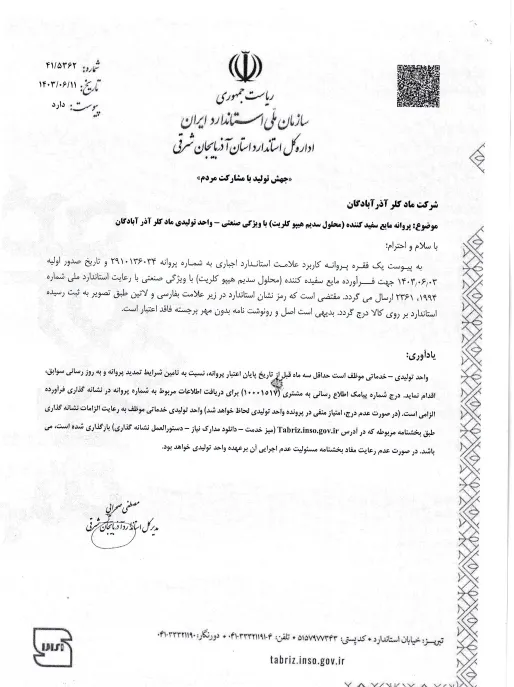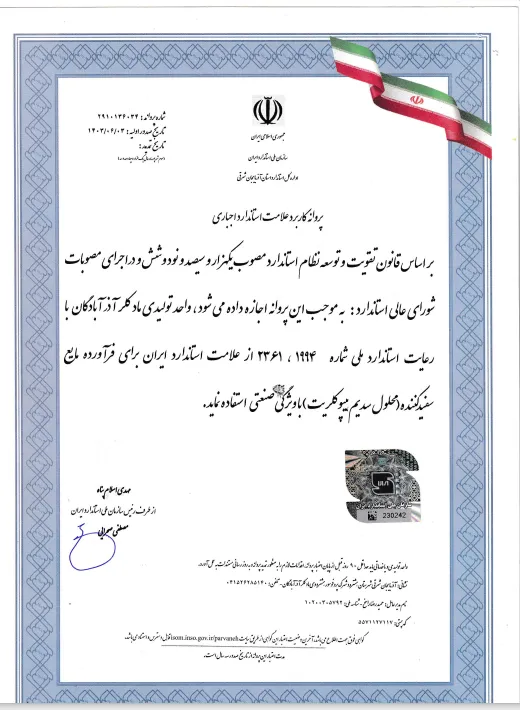

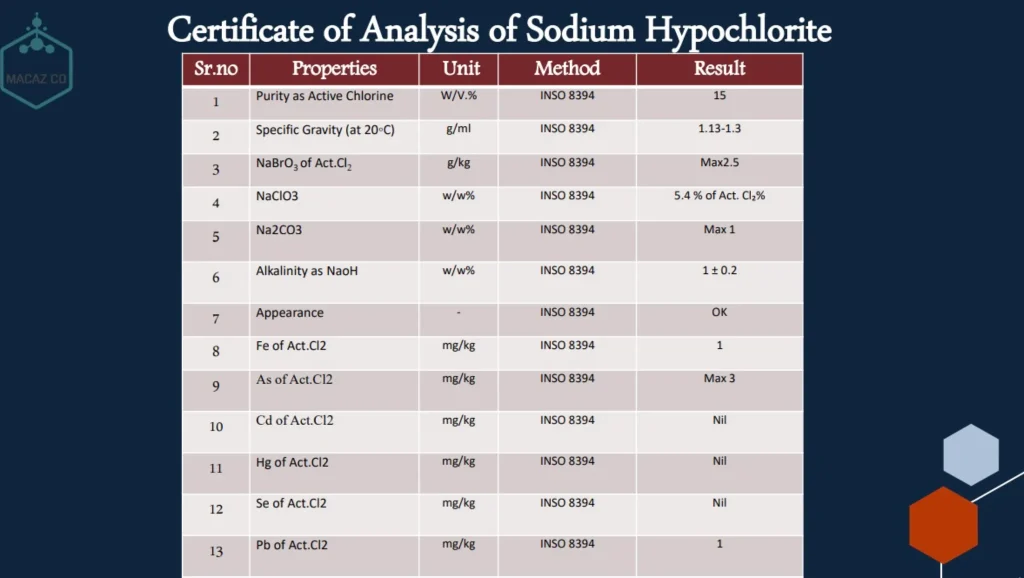
Sodium Hypochlorite 12%-16%
Name: Sodium Hypochlorite
Chemical Formula: NaOCl
Physical Properties: A liquid with a yellowish color, strong taste, and pungent odor.
Applications: Disinfectants, paper bleaching agents, water treatment chemicals, pesticides, dyeing agents, activators and stabilizers, and bleaching agents in the textile industry.
Stability and Reactivity: Sodium hypochlorite is an unstable solution and gradually loses its effectiveness when exposed to heat and light. It may be corrosive to metals.
Emergency Response and Hazards:
In case of leakage, immediately use a mask and gloves and proceed to contain the spill. It may cause severe skin burns and eye injuries. If spilled in the environment, dilute with water and neutralize using acetic acid. Restrict access to the contaminated area until the contamination is completely removed.
Handling and Storage:
Store the product in sealed containers in a cool place, away from sunlight, and with proper ventilation. Avoid contact or mixing with acids and chlorates, which may release chlorine gas.
Packaging: 25 tons are transported by special tank trucks for sodium hypochlorite transportation.
Applications of Sodium Hypochlorite (Bleach):
1. Water and wastewater disinfection
2. Sanitizing and disinfecting agent
3. As a bleaching agent in detergents
4. Cleaning and disinfecting swimming pools
5. Use in hospitals
6. Use in aquaculture facilities
7. Use in dairy industries
🛡️ Safety and Hygiene – Sodium Hypochlorite (Bleach)
- Use of Protective Equipment
Always wear protective gloves, safety goggles, and a mask if necessary when handling sodium hypochlorite. - Proper Ventilation
Ensure adequate ventilation in enclosed spaces. The vapors may cause irritation to the eyes and respiratory system. - Safe Storage
Store away from direct sunlight, heat, and acidic substances. Use a tightly sealed, non-transparent container. - In Case of Skin or Eye Contact
Immediately rinse the affected area thoroughly with plenty of water. Seek medical attention if symptoms persist. - Hazardous Reactions
Avoid mixing with acids or ammonia, as it can release toxic gases. - Accidental Ingestion
Sodium hypochlorite is dangerous if swallowed. Do not induce vomiting. Seek immediate medical attention.