
Industrial Sodium Hypochlorite: Complete Guide to Hazards, Safety Precautions, and Storage (MSDS)
Industrial sodium hypochlorite (NaOCl), commonly known as industrial bleach, is one of the most powerful and widely used chemicals across numerous industries. From water and wastewater treatment to textile manufacturing, paper production, and detergent manufacturing, it serves as an unmatched disinfectant and bleaching agent. However, alongside its high effectiveness, sodium hypochlorite is also a highly reactive and corrosive chemical.
Ignoring the hazards of industrial sodium hypochlorite or failing to follow proper Material Safety Data Sheet (MSDS) guidelines can result in serious injuries, costly equipment damage, and significant operational risks. This comprehensive guide explains the major hazards, prohibited chemical reactions, personal protective equipment (PPE), first aid procedures, and proper storage practices for safe handling.
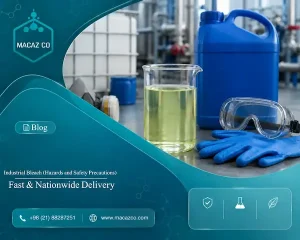
Major Health Hazards of Industrial Sodium Hypochlorite
Industrial sodium hypochlorite solutions (typically containing 10–15% available chlorine) are significantly more hazardous than household bleach.
Eye Contact
Splashing sodium hypochlorite into the eyes can cause severe irritation, redness, corneal damage, and, in extreme cases, permanent blindness.
Skin Contact
Due to its highly corrosive nature, prolonged skin contact may cause irritation, chemical burns, blistering, and tissue damage.
Inhalation
Breathing sodium hypochlorite vapors may irritate the respiratory tract, causing coughing, difficulty breathing, and, at high concentrations, pulmonary edema and severe lung injury.
Ingestion
Accidental swallowing can result in severe burns to the mouth, throat, esophagus, and stomach, potentially leading to internal bleeding and life-threatening complications.
Dangerous Chemical Reactions (Never Mix Sodium Hypochlorite with These Chemicals)
One of the most common and dangerous mistakes in industrial environments is mixing sodium hypochlorite with incompatible chemicals.
Chemical Mixed with Sodium Hypochlorite | Reaction | Hazard Level |
Acids (e.g., Hydrochloric Acid) | Rapid release of toxic chlorine gas | Extremely High (Potentially Fatal) |
Ammonia or Ammonium Compounds | Formation of toxic chloramine gases | High |
Organic Solvents and Combustible Materials | Oxidation reactions that may cause fire or explosion | High |
| Hydrogen Peroxide | Violent reaction with rapid oxygen release | Moderate to High |
Required Personal Protective Equipment (PPE)
Personnel handling industrial sodium hypochlorite should always wear appropriate protective equipment.
- Safety Goggles: Chemical splash goggles that completely seal around the eyes.
- Chemical-Resistant Gloves: Nitrile or neoprene gloves provide excellent resistance.
- Respiratory Protection: Respirators equipped with filters suitable for chlorine and acid gases, particularly in confined spaces or during tank loading and unloading.
- Protective Clothing: Chemical-resistant aprons, coveralls, and long rubber safety boots.
First Aid Measures
Immediate action is critical in the event of exposure.
Eye Exposure
Keep the eyelids open and flush the eyes continuously with clean, lukewarm water for at least 15–20 minutes. Seek immediate medical attention.
Skin Exposure
Remove contaminated clothing immediately and rinse the affected skin thoroughly with plenty of water.
Inhalation
Move the affected person to fresh air immediately. If breathing has stopped, begin CPR and contact emergency medical services without delay.
Ingestion
Do not induce vomiting. Give the affected person large amounts of water or milk if conscious and transport them to a medical facility immediately.
Proper Storage and Handling Guidelines
Sodium hypochlorite is chemically unstable and gradually loses its available chlorine content if stored improperly.
Temperature
Store in a cool environment. Elevated temperatures significantly accelerate decomposition.
Light Exposure
Ultraviolet (UV) radiation rapidly degrades sodium hypochlorite. Use opaque containers and protect them from direct sunlight.
Ventilation
Storage areas should have adequate ventilation to prevent the accumulation of chlorine vapors.
Storage Containers
Suitable storage materials include:
- High-Density Polyethylene (HDPE)
- Fiberglass Reinforced Plastic (FRP)
- PTFE (Teflon)
Avoid using metallic containers except for titanium, as most metals accelerate decomposition and corrosion.
Purchase High-Quality Industrial Sodium Hypochlorite from Maad Chlor AzarAbadegan
The quality of raw chemical materials directly affects both operational safety and production efficiency. Impurities in industrial sodium hypochlorite may lead to unwanted chemical reactions, rapid degradation, and equipment scaling.
Maad Chlor AzarAbadegan, backed by more than 16 years of experience in the chemical manufacturing industry (2007–2023), has entered a new era of knowledge-based production since 2023. Leveraging advanced technical expertise, a highly qualified team, and a strong commitment to quality, we manufacture and supply industrial sodium hypochlorite and other chemical products with exceptional purity while complying with the strictest international safety standards.
Contact our technical specialists today for pricing, technical consultation, and direct purchasing of premium-quality industrial sodium hypochlorite.
Buy Premium Industrial Chemicals from Maad Chlor AzarAbadegan
Maad Chlor AzarAbadegan is a trusted supplier of industrial chemicals, providing certified products with guaranteed quality and reliable laboratory analysis.
Our product portfolio includes:
- Industrial Paraffin for textile manufacturing, candle production, and lubrication applications.
- Industrial Sodium Hypochlorite (Bleach) for water treatment and industrial disinfection.
- Hydrochloric Acid (HCl) for metal pickling, industrial cleaning, and various chemical processing applications.
Our experienced technical team is ready to provide professional consultation and fast nationwide delivery.
Direct Sales Consultation: +98 (21) 88287251
Price Inquiry & Online Orders: +98 912 019 9853
Maad Chlor AzarAbadegan – Your Trusted Partner for High-Quality Industrial Chemicals.