Hydrochloric Acid 31%-33%
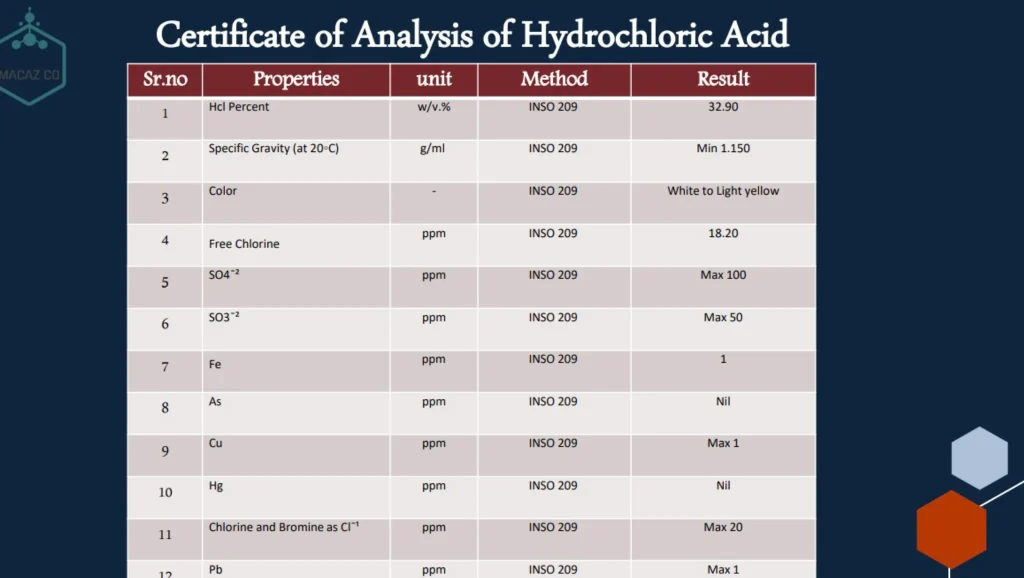
Name: Hydrogen Chloride and Hydrochloric Acid, Muriatic Acid
Chemical Formula: HCl
Physical Properties: A liquid with a yellowish color and a sharp odor.
Applications: Used in acidizing processes including oil wells, boiler scale removal, ore reduction, metal cleaning, and as an aqueous solution (approximately 10% by weight) in the preparation of muriatic acid (cleaner and remover of various surface deposits).
Stability and Reactivity: Heat is generated when mixed with water. Splattering and boiling may occur. Should not come into contact with strong bases. Avoid contact with sulfuric acid, amines, bases, carbonates, and oxidizers. Corrosive to some metals. Contact with common metals may produce transferable hydrogen gas.
Emergency Response and Hazards:
In case of leakage, immediately use mask and gloves and proceed to stop the leak. Collect any spilled material if possible. Neutralize remaining material by adding substances such as lime, calcium hydroxide, or sodium carbonate. Restrict access to the contaminated area until fully cleaned. Cleanup should be performed by trained personnel.
Handling and Storage:
Store the product in sealed containers in a cool place with proper ventilation. Keep away from incompatible materials such as flammables, metals, and alkalis. Do not store in containers made of polyethylene or natural rubber.
Packaging:
Available in bulk in polyethylene tanks or in 220-liter and 1000-liter polyethylene (HDPE) drums.
Applications of Hydrochloric Acid:
- In the chemical industry
- In water treatment
- Hydrochloric acid is used for water purification and pH control in water and wastewater treatment.
- In the metal industry
- In the petrochemical industry
- In cleaning and disinfection
- In the pharmaceutical industry
- In agriculture
- Other applications:
- Food industry
- Laboratory equipment
- Rubber production
- Cleaning of cooling tower systems
🛡️ Safety and Hygiene – Hydrochloric Acid
- Use of Protective Equipment
When handling hydrochloric acid, always wear chemical-resistant gloves, safety goggles, protective clothing, and a respirator mask if necessary. - Proper Ventilation
Use strong ventilation in enclosed areas. Hydrochloric acid vapors are highly irritating to the eyes, skin, and respiratory system. - Safe Storage
Store in resistant, tightly sealed containers. Avoid contact with metals and alkaline substances. Keep away from heat and direct sunlight. - In Case of Skin or Eye Contact
Immediately rinse the affected area with plenty of water and seek medical attention promptly. Prolonged contact can cause severe burns. - Inhalation and Ingestion Hazards
Inhalation of hydrochloric acid vapors can cause severe irritation and respiratory problems. Ingestion is very dangerous and requires immediate medical care. - Emergency Measures
In case of ingestion or inhalation, move the person to fresh air and seek medical help immediately. Do not induce vomiting. - Disposal and Environmental Protection
Avoid disposal into surface water or sewage systems. Dispose of according to environmental regulations.